 Search
An important part of the Gansu Tibetan region is the link between the mainland and Xizang, and the bridge of friendly exchanges between Tibetan and Han nationalities. Due to its unique geographical location, this place has been a battleground for military strategists since ancient times and holds an important position in the battlefield.
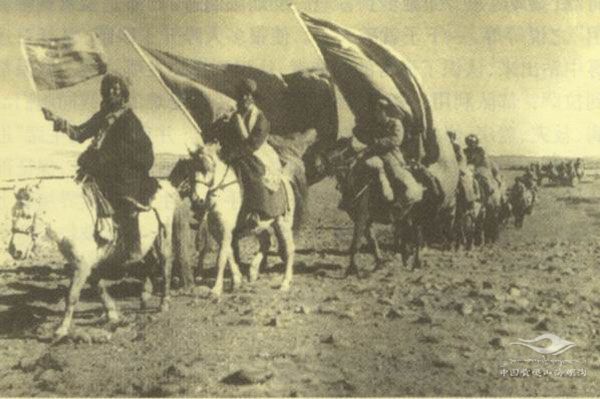
In 1935, the First, Second, and Fourth Front Armies of the Red Army successively entered and stationed in 16 counties of Garze Prefecture, with a period of activity lasting for 15 months. For the first time, the Red Army sowed the seeds of revolution in Tibetan areas of China. The people of Ganzi Tibetan region have made tremendous sacrifices and historic contributions to support the Red Army, and their revolutionary achievements will forever be recorded in history. In 1950, the older generation of revolutionaries, Comrade Deng Xiaoping, made the evaluation that "the people of Ganzi Tibetan region have fulfilled the greatest responsibility to preserve the Red Army".
It is worth mentioning that the top ten marshals of the founding of the country, except for Marshal Chen Yi, all visited the Garze Tibetan region during the Long March; All the generals, except for General Su Yu and General Xu Haidong, visited the Garze Tibetan region during the Long March.
On May 29, 1935, the First Red Army flew over the Luding Bridge in Luding, shattering Chiang Kai shek's dream of making Zhu and Mao the second Shi Dakai, and opening up the passage for the Red Army to go north to resist Japan. The Luding Bridge became a milestone in the history of the Red Army's Long March and was praised by international friends as the "thirteen iron chains that split the road to the Republic". Comrade Mao Zedong also wrote the magnificent poem "Dadu Bridge with cold iron cables" for this, creating a miracle in Chinese military history.
After the Red Army successfully captured the Luding Bridge, they crossed the enemy defense line by flying over the ridge and crossed the Jiajin Mountain at the confluence of the First and Fourth Front Armies at Lianghekou, declaring the complete bankruptcy of Chiang Kai shek's plot to "pursue the south and block the north" and "intercept several sections of it". Under the influence of Zhang Guotao's separatism, the Fourth Red Army suffered significant losses at Baizhangguan as they approached Chengdu and headed south to Yazhou. They then advanced westward to Kangbei (in the areas of Ganzi, Danba, Luhuo, Daofu, and Xinlong in Ganzi Prefecture) and established the Chuankang base. Zhang Guotao established a new Central Committee (also known as the "Second Central Committee") to split the Party and the Red Army, which was opposed by the Central Committee and comrades such as Zhu De and Liu Bocheng. In order to preserve the strength of the main force of the Red Army and achieve the great plan of the Red Army's northward resistance against Japan, the Red Army Headquarters ordered the Red Army's Second and Sixth Corps, which were establishing base areas in the Yun and Gui regions, to march northward to Ganzi and meet with the Fourth Red Army. The Red Second and Sixth Army Corps went through arduous battles and passed through counties such as Batang, Xiangcheng, Litang, Derong, Daocheng, and Baiyu before successfully meeting the Red Fourth Army in Ganzi. Jing reorganized the Second and Sixth Army Corps into the Red Second Front Army in Ganzi and decided to head north. Therefore, Ganzi will become a turning point in the history of the Long March of the Red Army, laying the foundation for the three main forces of the Red Army to meet together.
The Long March of the Red Army sowed the first spark in the Tibetan region, and actively carried out a series of effective local work in Ganzi Prefecture, establishing the first local party organization and the first local minority Soviet government (Boba government), local armed forces, etc. (such as Danba Tibetan Independent Division) in the Tibetan region; The Red Army has signed various peace and friendship treaties with Deges, Lingque Temple, Ganzi Temple, Baili Temple and other temples. Commander Zhu De has also made many special trips to Ganzi Baili Temple to visit the Abbot Geda Living Buddha, exchange gifts, hold long talks by candlelight, and Geda Living Buddha has also visited Commander Zhu De in Ganzi for many times. Under the tireless teachings of Commander Zhu, Geda Living Buddha has become the most loyal friend of the Red Army and the CPC. He has done a lot of useful work in liberating Xizang, and was assassinated by imperialist agents when he went there; Various training courses were held to vigorously cultivate Tibetan cadres, and many Tibetan soldiers later became the backbone of the Red Army; The "Ganzi Boba Government" (Central Government of the Boba Yidewa Republic) established in May 1936 in Ganzi was a member of the Northwest United Government of the Chinese Soviet Union. It prepared for the adjustment and combat of the Red Army in northern Kangxi. The Red Second and Sixth Armies and the Red Fourth Army's Grand Assembly Division in Ganzi, as well as the preparation of food and supplies for the Red Second and Fourth Army's northward movement, the placement of the wounded and sick left behind by the Red Army, the development of production, and the implementation of national unity did a lot of work.
The Chinese Workers' and Peasants' Red Army, led by the CPC, went on an expedition of 25000 li from October 1934 to October 1936, which lasted two years. It had the longest experience in Sichuan, reaching 20 months, while it stayed in Ganzi Prefecture for 15 months, covering almost every corner of Ganzi Prefecture. The Long March of the Red Army, from a tired army, entered the sparsely populated, resource poor, and harsh climate of Tibet, where they rested, replenished, and prepared for the north. It lasted for 15 months, during which tens of thousands of Red Army soldiers were supplied with food and materials by the people of Ganzi Tibetan area. This was a very arduous task for the poor people of Ganzi Tibetan area. But the people of Garze Tibetan region withstood this severe test and sacrificed their last grain of barley and last bit of wool to support the Red Army, making great sacrifices and contributions to the Chinese revolution.
In 1948, a group of hot blooded young people established the East Tibet Democratic Youth League (Batang Underground Party), a foreign organization of the CPC, in Batang, becoming the first CPC organization established by the Party in Tibetan areas, which was composed entirely of local Tibetan intellectuals. Later, this group of young people made great contributions to the peaceful liberation of Xikang Province and Xizang, becoming the backbone of the construction of Tibetan areas in Sichuan and the new Xizang.
After the peaceful liberation of Ganzi Prefecture, Liu Bocheng, the chairman of the Southwest Military and Political Commission, issued an order to march into Xizang, ordering the 18th Army of the Chinese People's Liberation Army to march into Xizang. The 18th Army immediately went to Kangding after receiving the order, and then entered Xizang by two routes from Xindu Bridge (one through Yajiang, Litang, Batang, and the other through Taining, Daofu, Luhuo, Ganzi, and Dege). In order to support the 18th Army's entry into Tibet, thousands of people in Ganzi Prefecture actively supported the work of the People's Liberation Army. The Dege chieftain sent tens of thousands of yaks to help the People's Liberation Army transport materials across the river. The Kangding Autonomous Region government selected hundreds of passionate young people who are proficient in both Tibetan and Chinese languages to form the "18th Army Ethnic Work Group" to accompany the army into Tibet as translators and handle ethnic, religious, and other work. Cadres and the masses provided clothing, water, and food for the soldiers of the 18th Army, and helped the People's Liberation Army build the Sichuan Tibet Highway. He has made great contributions to the liberation of Xizang.